Over the past two years, the Jet Propulsion Laboratory (JPL), a key NASA center, has laid off about 25% of its staff, the most recent being 550 individuals today. It’s difficult to fathom the specific damage that this does to NASA specifically and to this country in general but the overall effects are obvious. At JPL today, there has been a tremendous amount of hard-won institutional knowledge lost – and unrecoverable. That means: knowing who in DC has some spare change at the end of the fiscal year to assist a space project. That means: knowing the vendor who deals in esoteric parts. That means: recalling an usual set of conditions that can cause a system to fail.
This is all lost.

Few people understand what it takes to build something from scratch, be it a machine or an institution. It is a very difficult, arduous, and non-linear process. JPL wasn’t even built from scratch. It came out of an Army lab which came out of compound used by Caltech researchers. The JPL of today is more than 80 years in the making.
Most of the US institutions that, until recently, looked like part of the permanent national fabric, were built with the extreme economic imbalance that favored the United States after World War II. I wonder if the US even has the funds, let alone the will, to reproduce a JPL in the future.
Anyone that believes that a private interest, such as SpaceX, can pick up the slack knows little about space explorations or private companies. For starters, SpaceX doesn’t yet have the expertise already found at JPL. In addition, SpaceX churns employees at a rapid rate. Comparatively, SpaceX has little institutional knowledge, an asset which becomes even more important the higher the mission bar is set. Sure, SpaceX has had some modest success in low Earth orbit, about 250 miles up. They still haven’t proved themselves for the major leagues, however.

JPL produced the first successful US satellite 68 years ago, in 1958. Four years later, it created Mariner 2, the first human effort to encounter another planet. Four years after that, Surveyor 1 soft landed on the Moon, a US first. Ten years after that, in 1976, Viking 1 soft landed on Mars, a human first. JPL designed and fabricated all US Mars rovers and currently oversees two that are in operational condition today. JPL still communicates with Voyager 1, operating 48 years after launch and, next year, will be an unfathomably distant 1 light-day away – 16 billion miles or 87 round trips from Earth to Sun and back. In addition, JPL created and oversees a variety of Earth satellites and missions which do no less than shape our understanding of our home planet every day.
None of these missions involved profit. Which is but one reason why private companies are not interested. All of these missions involved massive infrastructure, including launch and deep-space communications, that are of a scale that no corporation can even think of matching.
And the human capital? What smart person would spend years of education and training to work in an industry that can disappear with the flick of a pen? Foreign graduate students have been keeping US STEM graduate programs filled for decades now. We used to keep these students. I doubt we still will. Europe is opening its arms. And Chinese students now return to China.
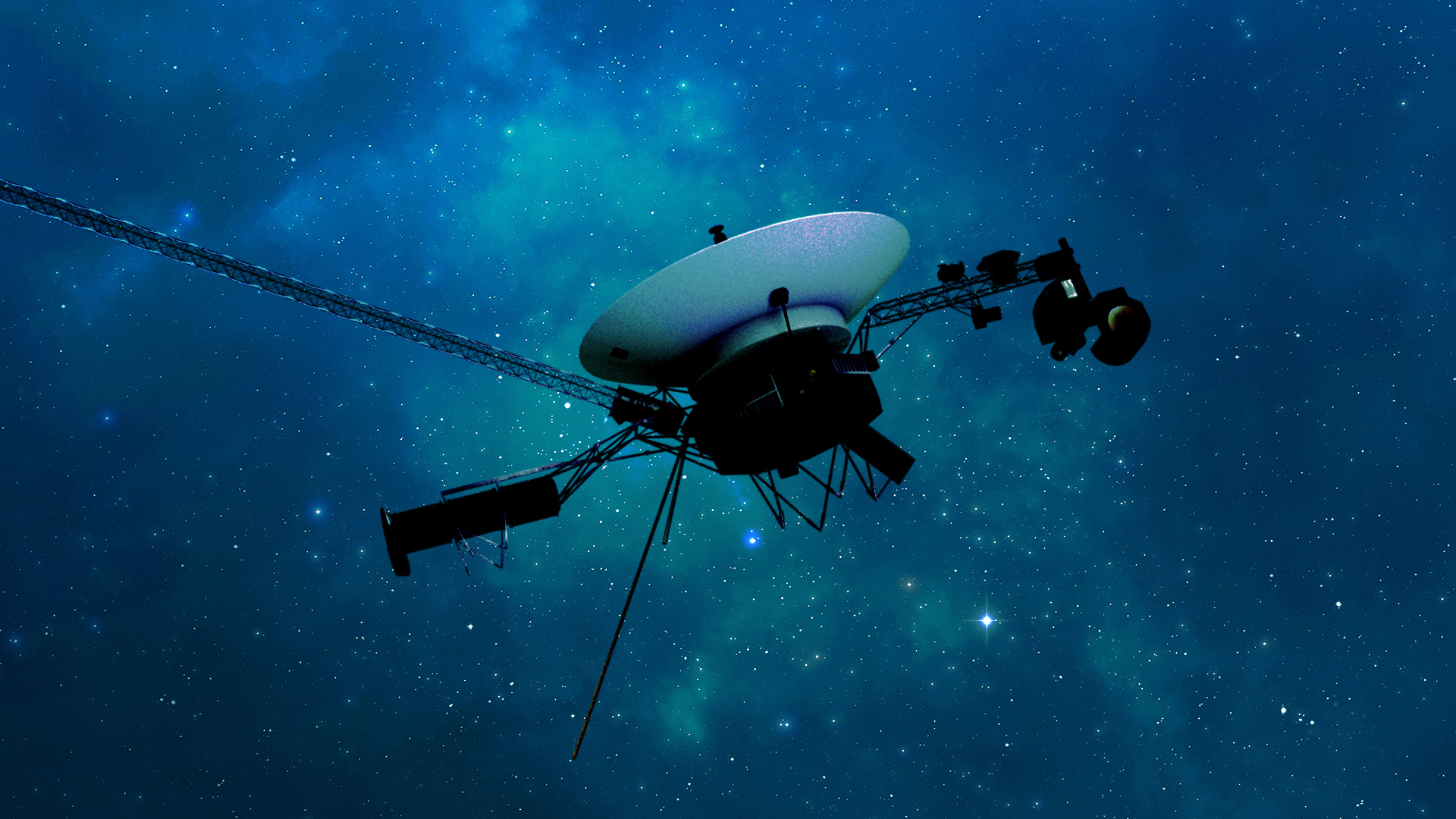
Credit: NASA/JPL-Caltech
Make no mistake. It would be easy to blame this on Trump and (especially) Republicans who are slashing national budgets to make the filthy rich even more filthy. And we can blame them. But two of JPL’s layoffs happened in the Biden administration when the House was controlled by Republicans and the Senate was controlled by Democrats.
I think our country has lost its way. It may explain the nihilistic path in which people are voting. It may explain why people throw up their hands in “exhaustion” rather than fight for something important to them – and encourage others to join them. The unwinding of JPL, in particular, and NASA, in general, is a catastrophe for the very life we expect to live in the United States. Business people and corporations didn’t get us to the Moon. They never do. The technological future has always been built by those who desire neither power nor profit but adventure. When you can’t dream about the future, you cannot create it.
I wonder if the United States can dream again.

 Thoughts and Thinks
A very thoughtful analysis. I would post it on my FB if I were allowed to do so. Thanks for the insight. Tucker
LikeLike